Published
May 15, 2026
If it feels like the world is asking more of America’s energy system—more power, more resilience, more speed—you’re not imagining it.
Against a backdrop of geopolitical instability, leaders from the energy, technology, and investment communities gathered at the third annual Energy Future Forum to confront a defining challenge: how to deliver abundant, affordable energy while powering the next wave of AI-driven innovation.
Hosted by the U.S. Chamber of Commerce and in partnership with RealClear and the National Center for Energy Analytics, the message was consistent all day: growth depends on regulatory certainty—and the ability to build the infrastructure the moment demands.
The “More” Moment
Marty Durbin, President of the Global Energy Institute at the U.S. Chamber, opened with a one-word summary of the forum: “more.”

More electrons. Faster permitting. Greater urgency. In an era of supply disruptions and rapidly rising demand, he argued, energy security will be built by moving faster and building smarter.
Permitting Reform: The Through-Line to Affordability
Across panels, speakers returned to the same bottleneck: if projects cannot get approved and built predictably, the system cannot keep up.
The Honorable Alan Armstrong, U.S. Senator from Oklahoma, stressed the need to overcome partisan barriers and deliver pragmatic permitting reform.
Ezra Yacob, Chairman & CEO of EOG Resources, shared optimism that U.S. oil production can continue to grow—especially with continued investment in forward-thinking technology.
But FERC Commissioner David Rosner put it bluntly: the number one way to increase energy affordability is to build more infrastructure.
The shared point: industry can meet the moment—but only if the rules are clear, stable, and workable.
Meeting Demand: Powering Data Centers, Communities, and Industry
Demand is rising—and not in a small way. Throughout the day, the conversation kept returning to the same practical question: how does the U.S. build enough energy and grid capacity, fast enough, to keep communities powered and the economy competitive?
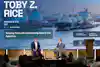
That starts with firm, dispatchable supply. Toby Z. Rice, President & CEO of EQT, spoke to the growing role of natural gas in meeting rising domestic demand and global LNG needs—reinforcing its position as a backbone fuel in an era of accelerating consumption.
But supply is only part of the story. As the digital economy expands, infrastructure is becoming the constraint. Andy Power, President & CEO of Digital Realty, Nat Sahlstrom, VP of Energy at Meta, and Chris Womack, Chairman, President & CEO of Southern Company, emphasized the scale of what comes next: modernizing the grid and building fast enough to support AI-driven data centers. Reliability and speed-to-build, they cautioned, are no longer abstract goals—they are real limits on American competitiveness.
That theme carried into solutions that can add flexibility closer to where demand is growing. Zach Dell, Co-Founder & CEO of Base Power, pointed to distributed energy storage and virtual power plants as tools that can complement the grid by improving responsiveness and reducing strain during peaks. And from the operator’s seat, John Bear, President & CEO of MISO, underscored the day-to-day reality: maintaining reliability gets harder as load growth accelerates and new resources come online, making coordinated planning essential.
Innovation and Economics: Think “Addition,” Not Just “Transition”
Energy innovation was a major theme, but so was a shift in framing.

Daniel Yergin, Vice-Chairman of S&P Global, argued for energy “addition”—expanding supply and strengthening resilience amid global uncertainty—rather than treating the moment as a one-for-one swap. The same perspective applied to supply chains: the more diverse and stable they are, the more secure the energy future becomes.
On the investment side, the message was similarly grounded. Mark Hume, Managing Director and Portfolio Manager at BlackRock, described how capital is increasingly drawn to projects that can withstand policy uncertainty and still meet long-term demand—another reason regulatory clarity matters.
At the innovation frontier, the forum focused less on novelty and more on execution. Damion Shelton, Co-Founder & Board Chairman of Agility Robotics, explored how AI-driven automation and robotics could help address labor constraints and scale energy systems more efficiently, while Matt Neal, President of North America at Siemens Energy, highlighted operational efficiency and digital innovation as essential tools for optimizing energy delivery.
And consistent with the “all-of-the-above” approach to energy diversification, Nicole Holmes. Chief Commercial Officer, GE Vernova Hitachi Nuclear Energy, and Jesse H. Ausubel, Director, Program for Human Environment at Rockefeller University, reinforced the role nuclear energy can play in achieving long-term scale—while still pursuing environmental objectives.
A Race Against Time
The forum closed with optimism—and a warning that the scarcest resource may be time.

David DesRosiers, President of the Real Clear Foundation, emphasized that urgency directly, and Pierce H. Norton III, President & CEO of ONEOK echoed what it will take to meet the moment: not just speed, but sustained coordination across utilities, regulators, and the private sector to reliably deliver power at scale.
With energy demand surging, AI advancing at full speed, and families increasingly sensitive to rising costs, the need for faster action—and clear, predictable rules—has never been greater.
This is the new age of “more.” The question is whether America will build with the urgency and certainty it requires.
Watch the full event here.

About the author

Heath Knakmuhs
Knakmuhs studies, develops, and communicates strategic energy policies and initiatives with a focus on the electric power sector. He also examines the impact of regulatory action, market-based factors, and emerging threats on the American electric grid.